~musings on a spiritual
identity~
Asked
by my publisher to write a piece about who I am, for our in house blog
tour, I experienced mixed feelings. It was naturally enlivening because I saw a
chance to introspect and perhaps learn something about myself. Strangely, on
the other hand, I felt somehow vulnerable—the private, the guarded part of me
felt that way. You see, I knew that the general theme of my description had to
be spirituality, and speaking of one's self as a spiritual being, a spiritual
seeker, strikes me as risky business. There's a lot of room for
self-aggrandizement in any forum in which an artist speaks of himself. Having
always been taught that true spirituality is for the humble…
Ironically, the flip side of the
pride vs. humility issue is the fact that a great percentage of the population
is entirely cynical, as regards spirituality and those people have a tendency
to view people like myself, as rather self-deluded or otherwise deluded
dreamers.
Nevertheless,
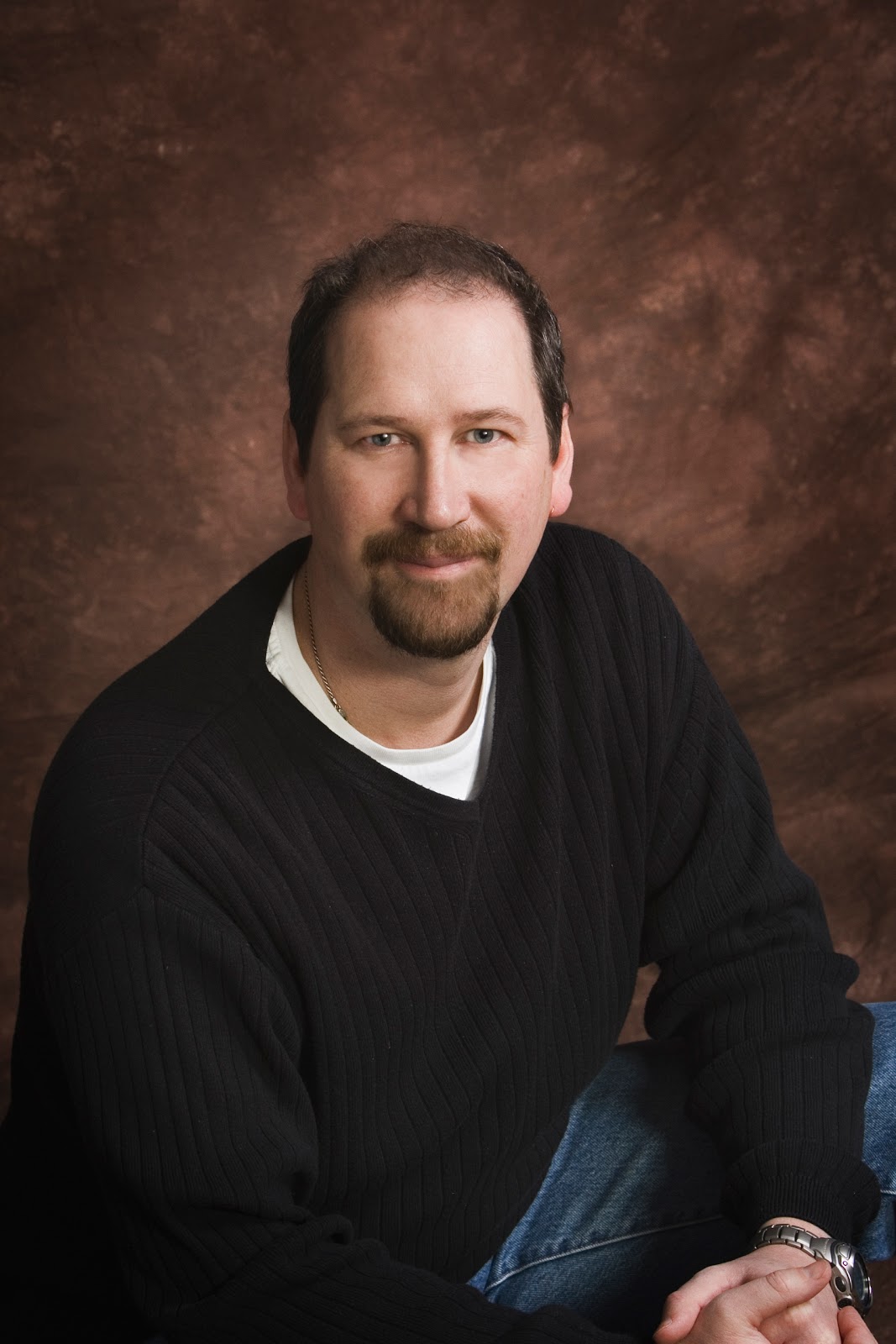
and at the least, Jesse S. Hanson is a person who has a great deal of interest
in spirituality. It is the backdrop, the undercurrent, of all my writing, and
it has become my most true identity. My piece here has taken the form of
a mini memoir, because it seems to be the only way to explain such an
identification. I have had, through no merit of my own, the greatest fortune
throughout my life, to be inspired by and to spend time in the company of
certain profound beings Who have highly—I would say fully—realized their
potential as human beings. I must say I am not one of them.
Truly speaking, there are so many
other ways I have attempted to identify myself. I was born into a devout
Lutheran family in the agricultural, sparsely populated, southeast corner of
North Dakota. There, I found identity in the freedom of the open land, roaming
the countryside on the backs of horses, then later as a high school wrestler, a
singer and songwriter of sorts. More generally, I think I viewed myself in
relation to my family, friends, and girlfriends. In the background was my
loosely committed relationship with God, through Jesus.
My college years also proved to be
an exercise in identity swapping. Before I could even get serious about any
kind of academic pursuits, I was exposed to elements of the prevalent counter
culture. Soon I saw myself as more of a Bob Dylan, Neil Young wannabe than as a
student. Here my relationship with Jesus was eventually challenged,
though
not entirely broken. I bounced from one major to another, switched schools
altogether and, by the middle of my second year, dropped out.
I went back and lived in my little
hometown for a couple of years. Once there, somehow, a few young people created
a kind of identity for me. I became some kind of false counter culture
celebrity to a certain group. They'd come up to my apartment and we'd listen to
albums, watch Star Trek and smoke pot. I was fortunate that that particular
identity didn't land me in jail. Anyway, having lost all recognition of myself,
after a while I got depressed and, on the advice of my family pastor, admitted
myself (more like: turned myself in) into the nine-week "drug"
program at the state hospital. In the admission process, I was told it was not
really a "drug" program, as there were not even any junkies in North
Dakota. Apparently, they called it the drug program to distinguish it and to
physically separate its residents from the much larger program for alcoholics
and criminals who had managed to avoid real prison. It was designed for kids,
boys and girls both, who needed to get their lives back on track. Some had been
busted for misdemeanors—dope dealing, shoplifting, etc.—which were often
related to a variety of substance abuses—gas and glue sniffing, etc. There were
a few cases of heavier type crimes, such as car theft and certain acts of
violence. In any case, immediately after my admission process, I was put on a
locked ward with the alcoholics and the aforementioned criminals. But it was
only for a week, to make sure I was drug free and then I was brought to the
slightly more liberal drug ward.
I learned a lot there: not only did
I learn that the majority of the staff members were using drugs, while
rehabilitating us, but I became aware of residents who got sent to prison from
that floor for such crimes as smoking a joint or having a drink of contraband
alcohol. I know snitching was encouraged; I don't know if it was rewarded or
not. This was the also the place where I first learned about spirituality. One
of the counselors, Daryl, was an initiate of a Master from India: Kirpal Singh.
This kind, humble, and honest counselor began to hold "spirituality
meetings" in the general activities room. These non-mandatory meetings
were attended by almost all the residents (it was something to do).
Interestingly the soft-spoken counselor somehow held the attention of the whole
group. We were quite fascinated by this person's anecdotes concerning his
remarkable Master.
At one point, a really wild
character was brought onto the floor. Short and stocky, long dark wavy hair,
wild eyes, and a very fierce demeanor. I admitted to the girl next to me that
that fellow made me kind of nervous. "Just don't let him know it,"
she advised me. I heard rumors about it taking six or seven aides to subdue him
in the solitary confinement area where he had just come from. Later, I became
good friends with the wild man, Mark, and it turned out that he was already
involved with this Kirpal Singh and was planning to get initiated at some point
in the future. He said that when he was in solitary, Daryl was the only person
who came to visit him. This is notable because the hospital was in Mark's
hometown.
Well, we were some mixed up kids, I
suppose, but we weren't crazy. That was yet to come in my life. Upon leaving
the hospital, I decided to move to Seattle, Washington. Mark had an apartment
there, in the University District, and offered to share it with me. In Seattle,
I worked a variety of jobs to make a living as I took to my new identity as a
street musician/song writer/spiritual seeker. At least I thought I was a
spiritual seeker. To attempt to make a long story short, during the years I
spent in Seattle, things went from
good
to better to worse to really bad. Eventually, after falling in with some
strange company and repeatedly experiencing the schizophrenic glories of LSD I
lost it. I began to hallucinate when I wasn't on the stuff. When I shut my eyes
it was a non-stop scrolling of horror, like an old-time movie reel running down
my field of inner vision. That lasted for a period of a week or two, I believe.
I didn't sleep. I assume that exacerbated my condition. I'd been in some tight
spots before, while hitchhiking, being drunk and vulnerable, etc. but I figured
this might truly be my undoing.
It wasn't to be. During this time
and the time leading up to it, in my desperation, I'd also taken my spiritual
seeking to a new level of sincerity. I'd begun to read everything I could find
about spiritual experience, including The Bible, The Bhagavad Gita, The Koran,
The Tibetan Book of the Dead, Varieties of Religious Experience. Modern things
also—Autobiography of a Yogi, Be Here Now, The Lazy Man's guide to
Enlightenment, and so forth. Most of these books frightened me further. Only
Kirpal Singh's books gave me hope and encouragement. But Kirpal had left His
body recently. I was stranded. One day, my friend, Mark came by; it was a long
time ago now that we had lived together, but we were still friends and He was
left in the lurch by Master Kirpal's passing also. There had been a magazine,
published in English, for the disciples of Kirpal and it was still being
printed after He left. This issue contained a very short, two or
three-paragraph article, with the title, "A Possibility". It was
about a man from the Rajasthan Desert of Northern India. Someone had reported
that this man had shown up at Master Kirpal's funeral and when he spoke of
Kirpal his eyes turned into Master Kirpal's eyes. That was the gist of it. Upon
reading this little article, I felt, somehow, very moved. When I shut my eyes,
no hallucinations.
That was the beginning of my
identity with spirituality and it was the beginning of a long relationship with
Ajaib Singh. Many more wonderful and mystifying experiences have been a part of
my existence from that time forward. Mostly, these things are quite personal.
The personal nature of a relationship with a God realized person makes it, for
me, unsavory to speak of it openly. I've done so, very briefly, on this
occasion, in the hope that some people will come to understand that my fiction
is based upon reality, as I know and experience it. But my genre of choice as a
writer, whether it's songs, poetry, or prose, is fiction. In fact, my
perception of prose is that it is another form of poetry—that one shouldn't tell
a story but that the story should unfold for the reader, as life unfolds for us
without explanation or commentary. I have set myself a kind of personal mission
to help expand the role of spiritual fiction in literature.
In terms
of writers dealing with spirituality, my style, although contemporary— even experimental—in form, is rather old fashioned,
in message. There’s a lot of fluff out there, from self-made gurus and
spiritual guides, etc. My book, shows spirituality as a gift from God. In But the idea is that the only kind of person
who can reach the poor souls in this institution has to be one of them. An
allegory, you see: even as the great spiritual benefactors throughout history
have come as one of us, though they are in truth, much more.
Since my meeting with Ajaib, I've
lived in quite a variety of locations, been through two devastating divorces,
fathered children (now grown), had many occupational
and
artistic identities, and remarried, finally, in my fifties to the woman who is
seemingly my soul mate. Master Ajaib left the body several years back and I was
again devastated. But recently I have
been so fortunate as to once again come into the company of the Master, in the
form of Master , of Italy, a devoted
disciple of Kirpal and Ajaib.
My
novel is published with . My folk-rock band, , for which I am the songwriter
and guitarist, has two CD's: The Lovers of Kali Yuga and Primitive
Spirit. I am working on a new novel and have aspirations to publish a
collection of my poetry and song lyrics. I have had short works and poetry
published in a few magazines, including Reach Poetry, Dawntreader, Sz Poetry,
etc.
Those
interested in learning more about Song of George, as well as my other
work and interests, can find me on my blog at:
and
on Goodreads at:
You may also contact me directly by email at: dragonssong100ml@yahoo.com
Thank
you so much for your time, dass,
Jesse